

Photo Credit: Getty Images
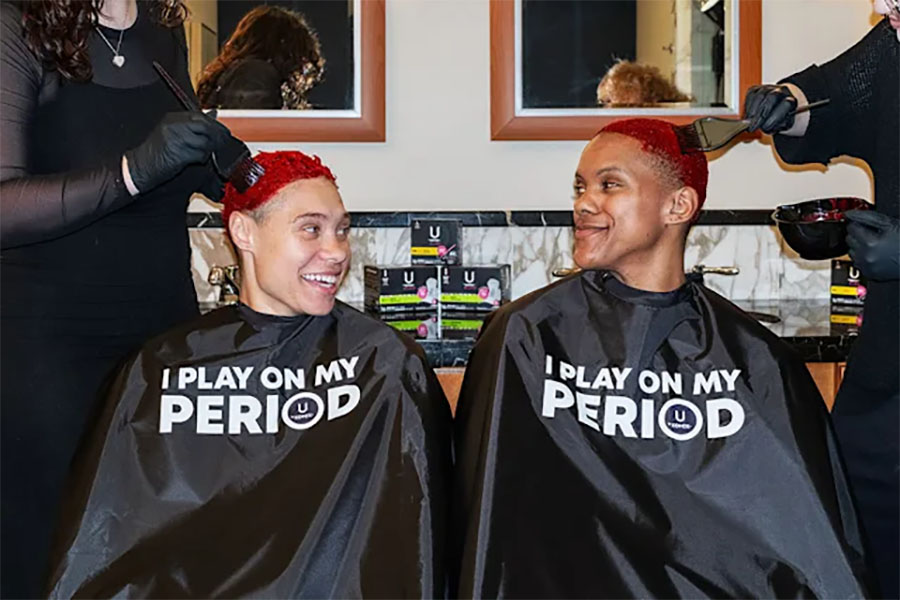
WNBA players Courtney Williams and Natisha Hiedeman are using the basketball court as their stage to spark an important cultural conversation. Known together as the Stud Budz, the pair debuted bold "period red" hairstyles during a September game between their team, the Minnesota Lynx, and the Indiana Fever. The change was more than a fashion choice. It was a statement made in partnership with U by Kotex, aiming to challenge taboos around menstruation and empower women to continue thriving in sports despite it.
Their message was clear: periods should never hold women back. On Instagram, they declared their commitment to the cause with the line, "Play on your period with U by Kotex, for powerful protection." Both athletes emphasized that their platform as professional basketball players and influencers carries a responsibility to represent realities often ignored in sports culture.
Williams explained that their decision came from a desire to normalize discussions around menstruation. She noted that even within their team, conversations about balancing sports and womanhood, including motherhood, are common and openly supported. Hiedeman echoed this, pointing out that young athletes need visible examples showing that periods are natural and not barriers to performance.
Fans quickly praised their boldness, with comments from fellow WNBA players and coaches celebrating their choice as an act of empowerment. Chicago Sky's Angel Reese, who has spoken about the challenges of playing during her period, also voiced her support, noting that representation matters deeply for young athletes.
By choosing to embrace bright red hair as a symbol, the Stud Budz transformed a topic often seen as private or uncomfortable into one of strength and solidarity. Their move highlights how sports figures can use their influence to shift cultural perceptions.
For the WNBA, this moment extends beyond style or sponsorship. It places women's health directly in the spotlight and underscores the league's role as a platform for advocacy. For Williams and Hiedeman, it is both personal and collective, a reminder that athletes do not just inspire through their performance but through their willingness to spark conversations that matter.