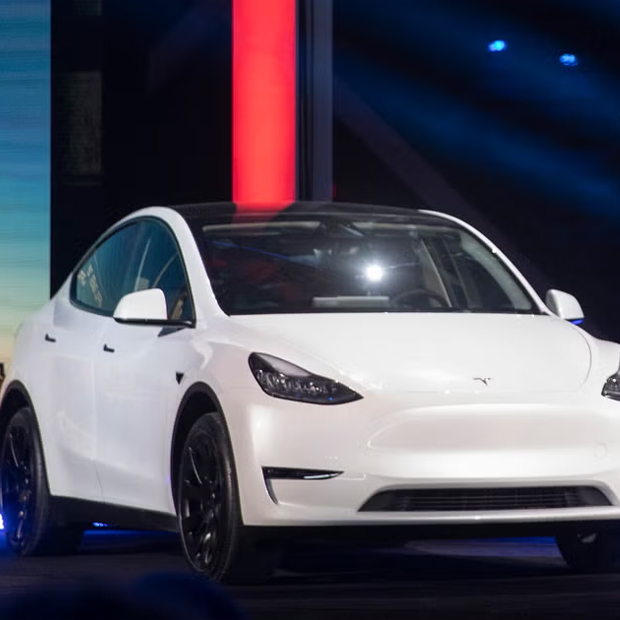
Photo Credit:Getty Images
Tesla's claim that its Full Self-Driving software is up to ten times safer than human drivers rests on deeply flawed statistical methodology, and the workers who train the technology say they wouldn't trust it to drive them, according to a major investigation published Wednesday by Reuters.
The report, based on interviews with nine former Tesla data labelers, a former self-driving engineer, and eleven independent traffic-safety researchers, found that Tesla inflated its safety figures by comparing crash data using incompatible thresholds, measuring only airbag-deployment incidents in its own vehicles against a federal dataset that captures far less severe accidents, including those requiring only a tow truck.
When researchers applied a proper apples-to-apples comparison, the claimed safety advantage shrank dramatically. Ten of the eleven researchers who reviewed Tesla's methodology told Reuters the figures amounted to misleading marketing rather than a credible safety analysis.
"It's like saying my jet airplane is faster than your World War II bomber," said Phil Koopman, an autonomous-vehicle safety expert at Carnegie Mellon University. "Yeah, so what's your point?"
Seven of the nine former data labelers said they would not trust FSD to drive them. One veteran engineer who reviewed Tesla crash data for years called the company's safety claims "bullshit."
The investigation also revealed that Tesla conducted extensive, labor-intensive mapping of its robotaxi operating zones ahead of public launches, directly contradicting CEO Elon Musk's repeated assertion that Tesla's approach requires no such local mapping, unlike rivals such as Waymo.
Tesla did not respond to detailed questions submitted by Reuters ahead of publication.
