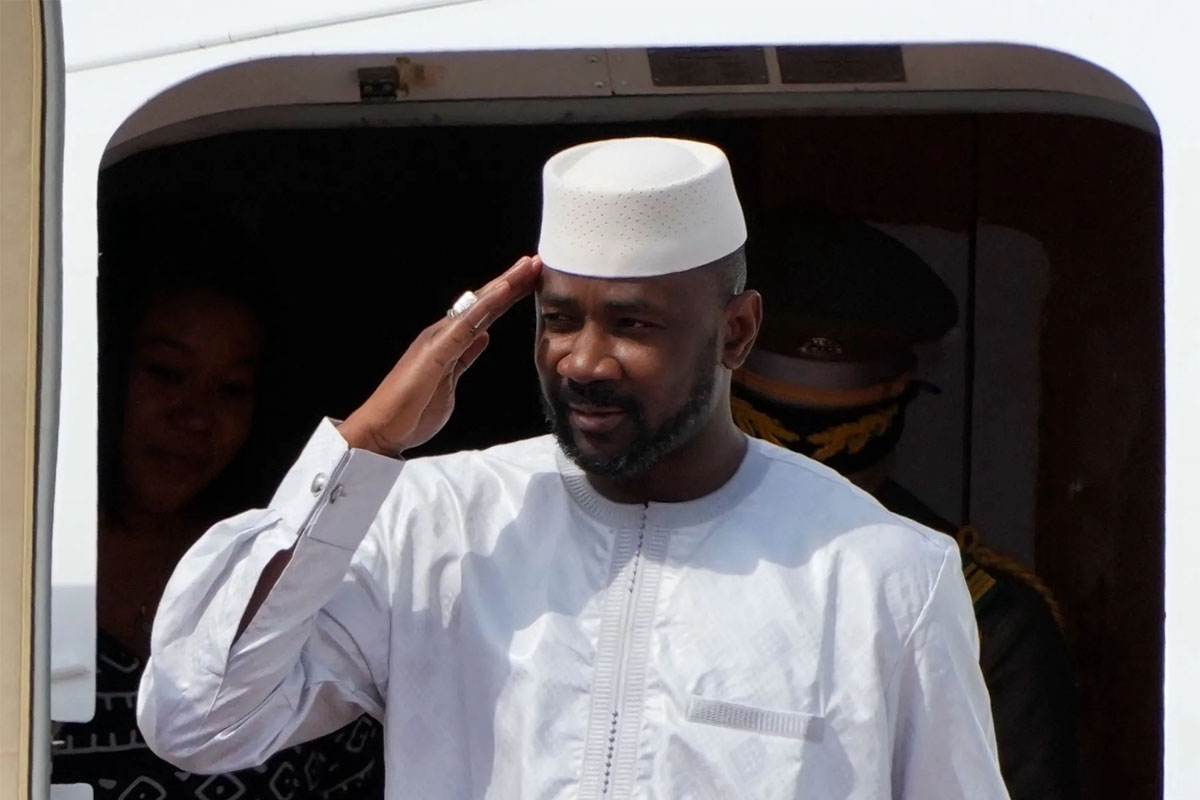
Photo Credit: Getty Images
Mali’s transitional parliament has passed a controversial law granting military ruler General Assimi Goïta a new five-year presidential term. The move, widely seen as consolidating authoritarian rule, allows the mandate to be renewed indefinitely and removes the need for democratic elections in the near future.
General Goïta, who came to power through successive coups in 2020 and 2021, had previously promised a return to civilian rule. That promise now appears to have been abandoned, with the transitional bill formalizing his continued leadership until at least 2030. The bill, passed unanimously by 131 members of the National Transitional Council, cites the need to “pacify” the country before holding elections.
The legislation also permits current transitional leaders to run for office in future elections, raising concerns about the fairness and transparency of any eventual democratic process. The decision follows months of escalating authoritarian measures, including a nationwide ban on political parties enacted in May.
In his public remarks, National Council President Malick Diaw praised the law as a necessary step for national rebuilding. He described the move as aligned with the will of the people, though many international observers and local opposition figures disagree. Critics argue that the law effectively institutionalizes military rule and paves the way for further repression of dissent.
Mali’s current trajectory poses significant risks to democratic development in the West African region. Since taking power, Goïta has strengthened military ties with Russia and distanced the country from traditional allies, including France and the regional bloc Ecowas. Mali has since exited Ecowas alongside Burkina Faso and Niger, forming an alliance of military-led governments with similar political interests.
The situation inside Mali remains unstable. Jihadist violence continues to escalate, with several coordinated attacks against military outposts occurring in recent weeks. Despite promises to restore security, the insurgency shows little sign of waning, and civilians are often caught in the crossfire.
The international community, including the United Nations and African Union, has expressed concern over Mali’s democratic backsliding. Efforts to engage the junta in dialogue have so far failed to reverse the trend toward militarization and suppression of civil liberties.
As General Goïta tightens his grip on power, the future of democratic governance in Mali grows increasingly uncertain. The five-year extension may offer short-term stability for the ruling elite, but it risks long-term consequences for governance, security, and international cooperation in the region.
The legislation also permits current transitional leaders to run for office in future elections, raising concerns about the fairness and transparency of any eventual democratic process. The decision follows months of escalating authoritarian measures, including a nationwide ban on political parties enacted in May.
In his public remarks, National Council President Malick Diaw praised the law as a necessary step for national rebuilding. He described the move as aligned with the will of the people, though many international observers and local opposition figures disagree. Critics argue that the law effectively institutionalizes military rule and paves the way for further repression of dissent.
Mali’s current trajectory poses significant risks to democratic development in the West African region. Since taking power, Goïta has strengthened military ties with Russia and distanced the country from traditional allies, including France and the regional bloc Ecowas. Mali has since exited Ecowas alongside Burkina Faso and Niger, forming an alliance of military-led governments with similar political interests.
The situation inside Mali remains unstable. Jihadist violence continues to escalate, with several coordinated attacks against military outposts occurring in recent weeks. Despite promises to restore security, the insurgency shows little sign of waning, and civilians are often caught in the crossfire.
The international community, including the United Nations and African Union, has expressed concern over Mali’s democratic backsliding. Efforts to engage the junta in dialogue have so far failed to reverse the trend toward militarization and suppression of civil liberties.
As General Goïta tightens his grip on power, the future of democratic governance in Mali grows increasingly uncertain. The five-year extension may offer short-term stability for the ruling elite, but it risks long-term consequences for governance, security, and international cooperation in the region.
