Photo Credit:Associated Press
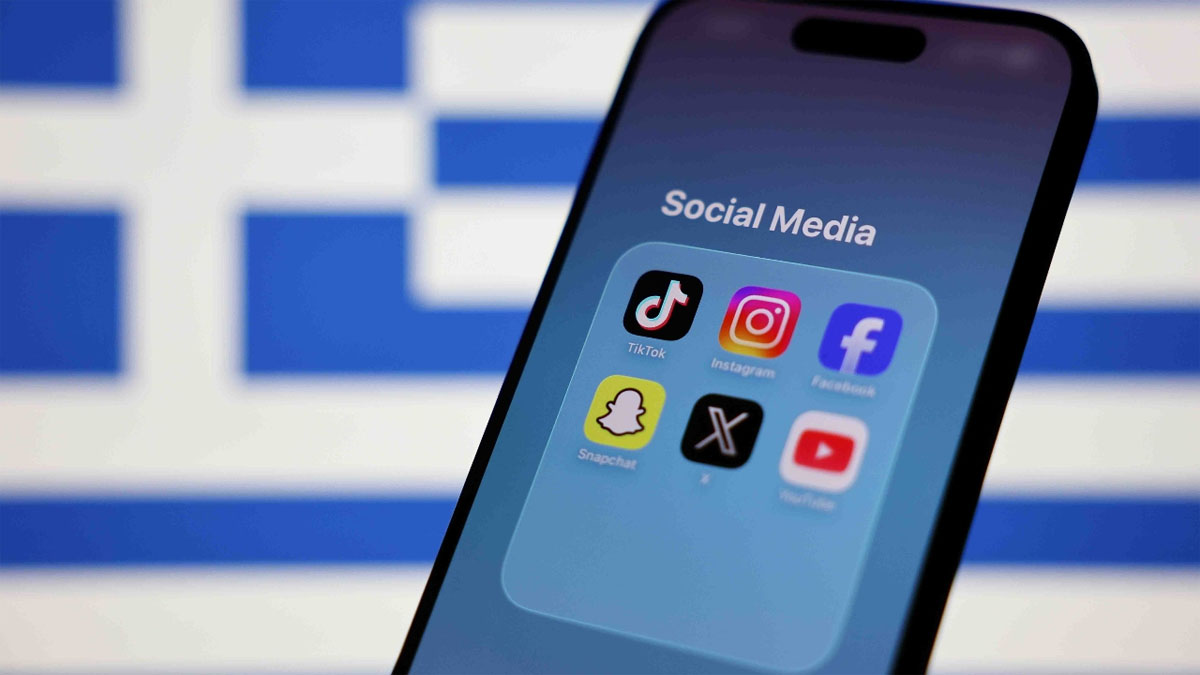
Prime Minister Kyriakos Mitsotakis has announced that Greece will prohibit children under the age of 15 from accessing social media platforms, in a move aimed at addressing mounting concerns over youth mental health and excessive screen use.
The restriction is scheduled to take effect on 1 January 2027, placing Greece among a growing number of countries introducing stricter controls on how young people engage with online platforms. Officials say thedecision responds to rising levels of anxiety, disrupted sleep patterns and what authorities describe as the addictive nature of social media design.
The government has already taken steps to limit digital exposure, including banning mobile phones in schools and introducing parental control tools to help regulate screen time. An opinion poll conducted earlier this year suggested strong public backing for the measure, with a large majority of respondents expressing support.
Under the new framework, platforms will be required to implement systems capable of restricting underage users or risk significant financial penalties. These sanctions are expected to align with provisions under the European Union’s Digital Services Act, which allows fines based on a percentage of global turnover.
Mitsotakis said the initiative followed consultations with parents and reflected broader concerns about the pressures faced by teenagers online. He added that Greece intends to push for similar rules across the European Union, arguing that national efforts alone may not be sufficient to tackle the issue effectively.
Other countries have begun exploring comparable policies. Australia introduced a ban on social media access for children under 16, while several European nations are considering or drafting their own regulations.
However, technology companies have raised objections, warning that outright bans may prove difficult to enforce and could unintentionally isolate vulnerable young users.
Further legislative details are expected later this year, as Greece prepares to formalise the policy and coordinate with European partners on a wider regulatory approach.
The restriction is scheduled to take effect on 1 January 2027, placing Greece among a growing number of countries introducing stricter controls on how young people engage with online platforms. Officials say thedecision responds to rising levels of anxiety, disrupted sleep patterns and what authorities describe as the addictive nature of social media design.
The government has already taken steps to limit digital exposure, including banning mobile phones in schools and introducing parental control tools to help regulate screen time. An opinion poll conducted earlier this year suggested strong public backing for the measure, with a large majority of respondents expressing support.
Under the new framework, platforms will be required to implement systems capable of restricting underage users or risk significant financial penalties. These sanctions are expected to align with provisions under the European Union’s Digital Services Act, which allows fines based on a percentage of global turnover.
Mitsotakis said the initiative followed consultations with parents and reflected broader concerns about the pressures faced by teenagers online. He added that Greece intends to push for similar rules across the European Union, arguing that national efforts alone may not be sufficient to tackle the issue effectively.
Other countries have begun exploring comparable policies. Australia introduced a ban on social media access for children under 16, while several European nations are considering or drafting their own regulations.
However, technology companies have raised objections, warning that outright bans may prove difficult to enforce and could unintentionally isolate vulnerable young users.
Further legislative details are expected later this year, as Greece prepares to formalise the policy and coordinate with European partners on a wider regulatory approach.
