 Photo Credit:AP Photo/Charlie Riedel
Bad Bunny made history at this year’s Super Bowl with a halftime performance that celebrated Puerto Rican culture, Latin identity and unity across the Americas. The global superstar became the first artist ever to headline a Super Bowl halftime show entirely in Spanish, marking a major cultural moment on the biggest stage in American television.
The 14 minute performance was built as a love letter to Bad Bunny’s homeland of Puerto Rico. From the moment he emerged from a sugarcane field to the final image of flags carried across the stage, the show placed Puerto Rican history, resilience and pride at its centre. The set design recreated familiar sights from the island, including a nail salon, a bar and his now famous casita, a small house styled like a traditional Puerto Rican home that has become a signature feature of his live shows.
The performance featured appearances from Lady Gaga and Ricky Martin, along with celebrity cameos from Pedro Pascal, Cardi B, Karol G, Jessica Alba and Alix Earle, many of whom were seen dancing on the porch of the casita. Lady Gaga delivered a Latin inspired version of her hit Die With A Smile, while Ricky Martin performed Lo Que Le Pasó A Hawaii, a song urging Puerto Ricans to protect their culture from being erased.
Bad Bunny performed a medley of his biggest hits including Tití Me Preguntó, MONACO and BAILE INoLVIDABLE, leaning heavily on tracks from his Grammy winning album Debí Tirar Más Fotos. Family and community themes ran throughout the show, including a wedding scene among Latino dancers and a symbolic moment where he handed his Grammy award to a child as his 2026 acceptance speech played on a small television.
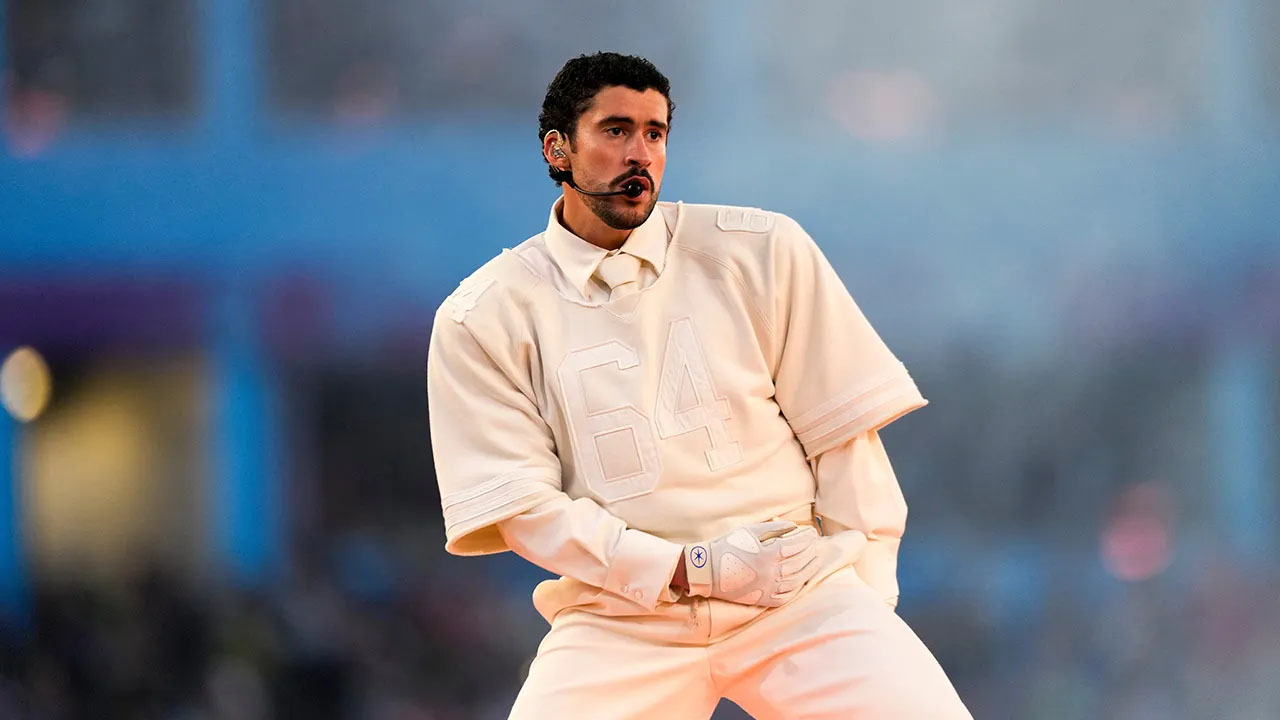
One of the most powerful moments came when Bad Bunny climbed an electricity pylon while rapping, a clear reference to the infrastructure failures and loss of life caused by Hurricane Maria in 2017. His beige sweater marked with the number 64 was widely interpreted as a nod to the official death toll, a figure that remains deeply controversial in Puerto Rico. Many residents have long criticised the US government’s response to the disaster, including the Trump administration at the time.
Despite these visual references, Bad Bunny made no direct political statements during the performance. He spoke just one line in English, saying God bless America before naming countries across Central, South and North America as dancers carried their flags. A billboard behind him read The only thing more powerful than hate is love, while the football he held at the end displayed the message Together, We Are America.
Even without explicit political commentary, former US president Donald Trump strongly criticised the performance. Posting on his Truth Social platform, Trump called the show absolutely terrible and said nobody understands a word this guy is saying, describing it as an affront to the greatness of America. Trump did not attend the Super Bowl, and an alternative All American Halftime Show organised by Turning Point USA was held separately and headlined by Kid Rock.
The performance marked Bad Bunny’s first appearance in the United States since releasing his Grammy winning album last year. He previously avoided touring the US mainland, citing concerns that fans could be targeted by immigration officers. At the Grammy Awards just days earlier, he used his acceptance speech to call for ICE out, making his decision to avoid overt political messaging at the Super Bowl notable to many viewers.
By the end of the night, Bad Bunny had delivered a confident, high energy performance that showcased Latin culture on the world’s biggest sporting stage. With Puerto Rico and the United States flags carried side by side in the final moments, the show stood as a powerful statement of identity, pride and unity, even as it sparked sharp political reactions beyond the stadium.
