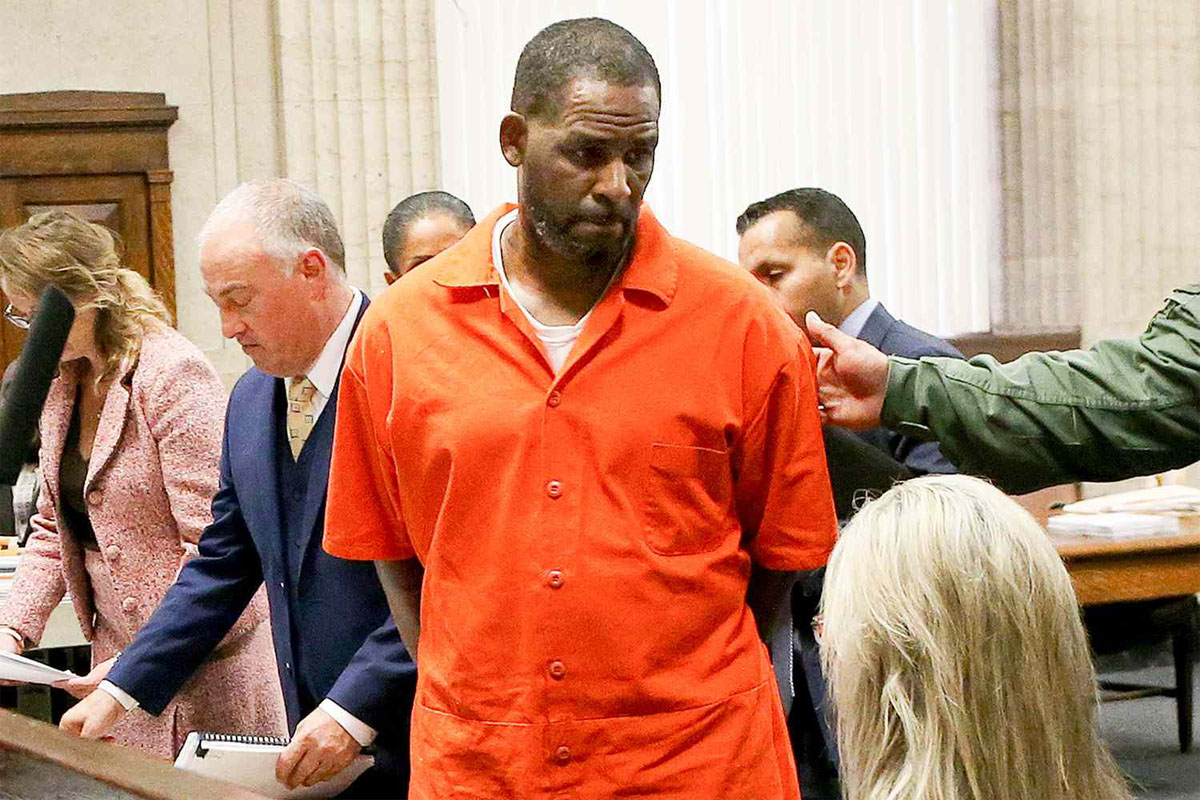
Photo Credit: Getty Images
R. Kelly’s legal team is sounding alarms over what they call a near-fatal medical crisis inside federal prison. According to documents filed on June 17, the 58-year-old singer, incarcerated at the Butner Federal Correctional Complex in North Carolina, was rushed to Duke University Hospital after collapsing in his cell on June 13.
Medical evaluation revealed blood clots in both legs and his lungs. Kelly’s team says doctors recommended surgery and a week-long admission. But within an hour, armed officers allegedly removed him from the hospital against medical advice. “He was denied necessary surgery,” Brindley told _Us Weekly_, calling the Bureau of Prisons’ (BOP) conduct “potentially fatal.”
The BOP has declined to comment, citing ongoing litigation.
Beyond medical negligence, Kelly’s attorneys allege something darker: a coordinated plot by BOP officials to orchestrate his murder. The claim hinges on testimony from Mikeal Glenn Stine, a terminally ill inmate who asserts he was propositioned by prison staff to kill Kelly in exchange for a staged escape. According to the sworn statement, Stine was transferred to Kelly’s unit, tracked him, and nearly executed the plan—only to back out and warn Kelly of the plot.
“Stine followed him. He watched him. He was prepared to carry out the execution,” the motion states. “But in that moment, he chose to tell Mr. Kelly the truth.”
Federal prosecutors have categorically dismissed the allegations. In a filing dated June 16, they described the claims as “fantastic” and accused Kelly of manipulating conspiracy theories to undermine his convictions. “Robert Kelly is a prolific child molester,” prosecutors wrote. “He is unapologetic and has never accepted responsibility.”
Kelly is currently serving a 30-year sentence for racketeering and sex trafficking, with an additional 20-year sentence from a separate Illinois case. His recent motion for emergency release was denied. Prosecutors assert his grievances—medical or otherwise—should be addressed within the prison system, not in court.
As legal battles continue, questions persist over inmate safety, medical oversight, and accountability within the federal prison system.
The BOP has declined to comment, citing ongoing litigation.
Beyond medical negligence, Kelly’s attorneys allege something darker: a coordinated plot by BOP officials to orchestrate his murder. The claim hinges on testimony from Mikeal Glenn Stine, a terminally ill inmate who asserts he was propositioned by prison staff to kill Kelly in exchange for a staged escape. According to the sworn statement, Stine was transferred to Kelly’s unit, tracked him, and nearly executed the plan—only to back out and warn Kelly of the plot.
“Stine followed him. He watched him. He was prepared to carry out the execution,” the motion states. “But in that moment, he chose to tell Mr. Kelly the truth.”
Federal prosecutors have categorically dismissed the allegations. In a filing dated June 16, they described the claims as “fantastic” and accused Kelly of manipulating conspiracy theories to undermine his convictions. “Robert Kelly is a prolific child molester,” prosecutors wrote. “He is unapologetic and has never accepted responsibility.”
Kelly is currently serving a 30-year sentence for racketeering and sex trafficking, with an additional 20-year sentence from a separate Illinois case. His recent motion for emergency release was denied. Prosecutors assert his grievances—medical or otherwise—should be addressed within the prison system, not in court.
As legal battles continue, questions persist over inmate safety, medical oversight, and accountability within the federal prison system.
